
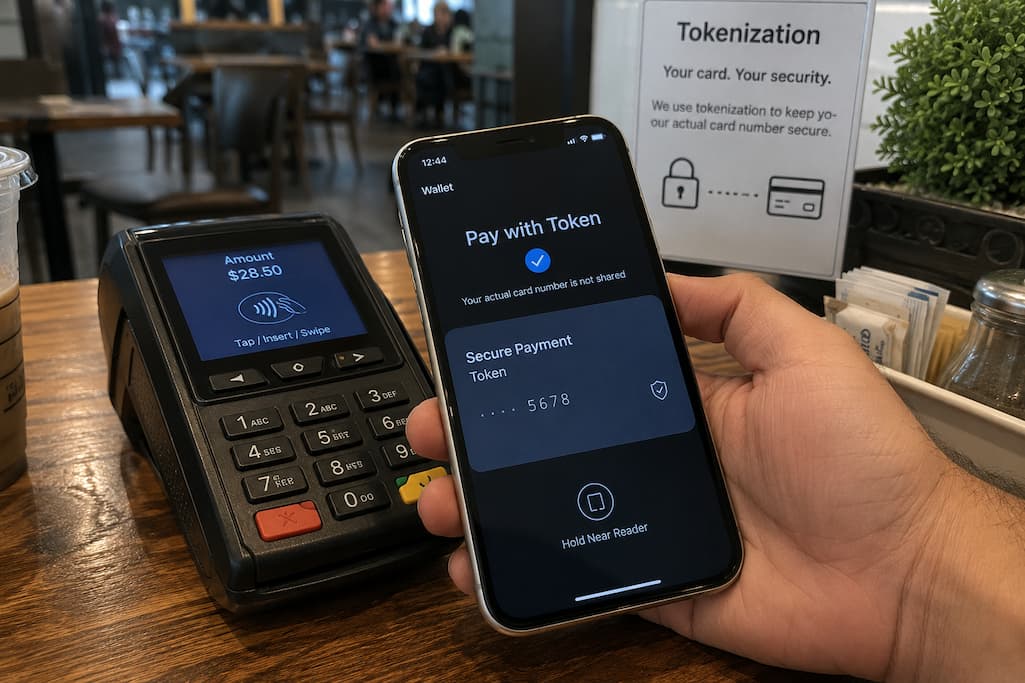
Billions of people pick up their phones, tap a payment terminal, and walk away without ever revealing their actual card number. While this may look very similar to using a physical debit or credit card, the underlying mechanism is completely different. Instead of transmitting actual card details, a virtual value is sent that is useless even if intercepted.
This technology, known as “tokenization,” has quietly become one of the most significant developments in payment security over the past two decades. While breakthroughs like contactless cards or mobile wallets have garnered significant attention, tokenization has not altered the user experience and has therefore received less notice. The checkout process remains unchanged, yet the underlying security architecture has been redesigned to diminish the value of stolen payment data.
With the rise of e-commerce, digital wallets, subscription services, and smart devices, the number of locations where payment data is stored or transmitted has skyrocketed. Each new storage point can become a potential target for criminals seeking to steal sensitive financial information. Tokenization addresses this issue by limiting the number of systems that require access to the actual card number.
Tokenization does not replace existing payment networks; it enhances them. It works alongside technologies such as EMV chips, encryption, fraud detection systems, and payment gateways, adding an extra layer of security without requiring users to learn new payment methods.
Understanding the fundamentals of tokenization helps explain why modern digital payment environments are increasingly resilient against various forms of payment fraud, all while allowing transactions to be completed in seconds.
Payment Security Before Tokenization
Historically, payment systems relied on the transmission and storage of the Primary Account Number (PAN)—the long card number printed on a debit or credit card. Although payment networks employed encryption and advanced fraud detection technologies, the card number itself still passed through multiple systems during the payment cycle.
With the rise of online commerce, merchants began storing payment data to facilitate recurring billing, faster checkouts, and customer account management. Payment processors, e-commerce platforms, membership management systems, and subscription services often require access to this same sensitive information.
While these systems do implement security measures, a fundamental fact remains: the more websites that hold legitimate credit card data, the larger the attack surface.
Large-scale data breaches demonstrate that even companies investing heavily in cybersecurity can become targets. Once attackers obtain a valid credit card number, the data can often be used for unauthorized purchases until banks detect suspicious activity or customers report fraudulent transactions.
The payment industry recognizes the increasing difficulty of protecting credit card numbers. Rather than building more robust security measures around sensitive data, an alternative approach is to minimize the flow of sensitive data within the ecosystem.
Tokenization Introduced a Different Security Philosophy
Traditional security often concentrates on protecting valuable information wherever it exists.
Tokenization approaches the problem differently.
Rather than allowing genuine card information to move through numerous systems, it replaces that information with a unique substitute known as a payment token.
A payment token resembles a payment credential because it can participate in transaction processing, but it has no independent financial value outside the environment where it was created.
If someone intercepts or steals the token, it generally cannot be used to perform unrelated transactions because it remains linked to specific rules established during its creation.
This represents an important shift in security strategy.
Instead of asking:
“How do we better protect the real card number?”
Tokenization asks:
“How can we prevent most systems from ever seeing the real card number at all?”
That seemingly small difference has transformed modern payment architecture.
A Token Is Not a Hidden Card Number
One of the most common misconceptions is that tokenization simply disguises or encrypts the original card number.
In reality, a payment token is neither.
A token is a replacement identifier that refers to the original payment credential through secure mapping systems maintained by authorized token service providers.
The genuine card number remains protected inside specialized infrastructure known as a token vault or secure token management environment.
Instead of storing the original card number, participating merchants, applications, or devices often store only the replacement token.
This distinction matters because a stolen token does not automatically reveal the original payment credential.
Even if an attacker obtains thousands of tokens from a compromised system, those values generally cannot be mathematically reversed to reveal the underlying card numbers.
The Basic Lifecycle of a Payment Token
Although implementations differ across payment providers, the overall process follows a consistent pattern.
| Stage | What Happens |
|---|---|
| Card enrollment | The genuine card information is securely submitted to a trusted token service. |
| Token generation | A unique payment token is created and associated with the original card. |
| Secure storage | The original card number remains protected inside secure token management systems. |
| Merchant or device storage | Only the payment token is stored for future transactions. |
| Payment request | Future purchases use the token instead of the actual card number. |
| Token resolution | Authorized payment systems securely map the token back to the underlying account during processing. |
| Transaction completion | The payment continues through standard authorization, clearing, and settlement processes. |
From the customer’s perspective, none of these steps are visible.
Whether paying with a smartphone, smartwatch, laptop, or saved payment profile, the experience remains almost identical.
The complexity stays behind the scenes.
Where People Encounter Tokenization Every Day
Although many consumers have never heard the term, tokenization supports a growing number of everyday payment experiences.
Common examples include:
- Mobile wallets
- Contactless smartphone payments
- Smartwatch payments
- Saved payment methods on shopping websites
- Subscription services
- In-app purchases
- Digital commerce platforms
- Some recurring billing systems
Each implementation may use tokenization differently, but they share the same objective: reducing unnecessary exposure of genuine payment credentials.
For example, when a customer adds a payment card to a mobile wallet, the wallet typically does not continue using the printed card number for every purchase. Instead, it receives a payment token that becomes associated with that specific device.
If that device is later lost, replaced, or removed from the wallet, the token can often be deactivated without affecting the underlying payment card itself.
This ability to manage payment credentials independently represents one of tokenization’s most practical advantages for both consumers and financial institutions.
Why Tokenization Works Well With Existing Payment Infrastructure
One reason tokenization achieved widespread adoption is that it did not require the global payment ecosystem to start over.
Banks, card networks, merchants, payment processors, and payment gateways already depended on standardized transaction flows developed over many years.
Rather than replacing those systems, tokenization integrates into the existing payment lifecycle.
Once a token is securely associated with the underlying payment account, the remainder of the transaction continues through familiar stages such as authorization, fraud evaluation, clearing, settlement, and reconciliation.
This compatibility allowed payment security to improve without requiring merchants to redesign every operational process or customers to learn an entirely new payment method.
In many ways, tokenization succeeded because it strengthened existing infrastructure instead of competing with it.
Tokenization and Encryption Solve Different Problems
Tokenization and encryption are frequently mentioned together, leading many people to assume they are interchangeable technologies. While both help protect sensitive information, they address different security challenges and often work together within the same payment system.
Encryption transforms readable data into an unreadable format using cryptographic algorithms and keys. If the correct key is available, the encrypted information can be decrypted back into its original form. This makes encryption ideal for protecting data while it is being transmitted across networks or stored in secure systems.
Tokenization, on the other hand, removes sensitive data from everyday business processes by replacing it with a substitute value. The token itself has no mathematical relationship to the original card number that would allow it to be reversed through decryption.
The difference becomes easier to understand when comparing their primary objectives.
| Feature | Tokenization | Encryption |
|---|---|---|
| Primary purpose | Replace sensitive data | Protect sensitive data |
| Original card number stored? | Only in secure token management systems | Yes, but in encrypted form |
| Can the value be mathematically decrypted? | No | Yes, with the correct cryptographic key |
| Best suited for | Limiting data exposure | Securing stored or transmitted information |
| Typical role | Data substitution | Data confidentiality |
Rather than competing technologies, tokenization and encryption complement each other. A payment system may encrypt information while it travels between systems and use tokenization to ensure most participants never need to handle the actual card number.
How Mobile Wallets Use Tokenization
One of the most familiar examples of tokenization appears in mobile wallets.
When a customer adds a payment card to a smartphone or smartwatch, the wallet generally does not save the printed card number as the credential used for future purchases. Instead, the enrollment process involves securely communicating with the issuing bank and authorized token service infrastructure.
After the card is verified, a device-specific payment token is created.
That token becomes associated with:
- The individual device
- The specific payment application
- The enrolled payment account
- Security policies established by participating institutions
When the customer later makes a purchase, the device presents the token rather than exposing the original card number.
Additional security mechanisms often work alongside tokenization during these transactions.
Depending on the payment platform, they may include:
- Device authentication
- Biometric verification
- Secure hardware elements
- Dynamic cryptographic values
- Transaction-specific authentication data
Together, these layers help ensure that possession of a payment token alone is generally insufficient to complete unauthorized purchases.
Why Merchants Benefit From Tokenization
Consumers often think of tokenization as a feature that protects their payment cards, but merchants gain significant operational advantages as well.
Historically, businesses storing customer payment information carried considerable responsibility for protecting that data. Even organizations following strong security practices remained attractive targets because payment credentials represented valuable information.
By replacing stored card numbers with payment tokens, businesses can significantly reduce the amount of highly sensitive payment data present within their own systems.
This reduction offers several practical benefits.
Reduced Exposure
If a merchant database is compromised, attackers may obtain payment tokens instead of genuine card numbers. While the incident still requires investigation and remediation, the exposed information is generally less useful than real payment credentials.
Simpler Payment Management
Many businesses support:
- Subscription services
- Membership renewals
- Installment payments
- Stored payment profiles
- Repeat purchases
Tokenization allows these services to continue functioning without requiring the merchant to repeatedly store or process genuine card numbers.
Improved Customer Experience
Customers increasingly expect convenient checkout experiences.
Saving payment methods, completing purchases with fewer steps, and maintaining recurring billing relationships become easier when merchants can safely reference payment tokens instead of requesting card information for every transaction.
Tokenization Throughout the Payment Journey
Although tokenization often receives attention during checkout, its influence extends across multiple stages of the payment lifecycle.
A simplified transaction might look like this:
Customer Device
        │
        ▼
Payment Token Presented
        │
        ▼
Merchant System
        │
        ▼
Payment Gateway
        │
        ▼
Token Resolution (Authorized Environment)
        │
        ▼
Card Network
        │
        ▼
Issuing Bank
        │
        ▼
Authorization Response
Notice that the original card number remains absent from much of the journey.
Instead, specialized token management systems securely translate the payment token into the underlying account information only where necessary for authorized processing.
This architecture limits unnecessary exposure without disrupting the established payment workflow.
Tokenization Does Not Eliminate Fraud
One common misunderstanding is that tokenization completely prevents payment fraud.
It does not.
Tokenization addresses one specific category of risk: the unnecessary exposure of payment credentials.
Many other threats still exist, including:
- Social engineering attacks
- Account takeover
- Phishing
- Identity theft
- Malware
- Merchant account compromise
- Stolen devices
- Authorized payment scams
Because fraud evolves continuously, payment security relies on multiple technologies working together.
Modern payment ecosystems frequently combine:
- Tokenization
- Encryption
- EMV authentication
- Fraud detection engines
- Risk scoring models
- Multi-factor authentication
- Behavioral analytics
- Device intelligence
Each layer addresses different attack techniques rather than attempting to solve every security problem alone.
This layered approach is one reason payment systems have become progressively more resilient without dramatically changing the checkout experience.
Challenges and Limitations
Although tokenization has become a foundational payment security technology, implementing and maintaining token services introduces operational complexity.
Organizations must coordinate with banks, payment processors, card networks, and technology providers while maintaining compatibility across numerous payment channels.
Some challenges include:
Token Lifecycle Management
Payment tokens may require updates when:
- Cards expire
- Cards are replaced
- Accounts change
- Devices are removed
- Wallets are reset
- Security policies change
Managing these transitions reliably requires sophisticated infrastructure.
Cross-Platform Compatibility
A token created for one payment environment may not necessarily function across every merchant, application, or payment platform.
Compatibility depends on the rules established by participating payment providers and token service operators.
Operational Dependencies
Because tokenization depends on secure mapping systems, payment providers must maintain highly available infrastructure capable of resolving tokens quickly and reliably.
Any disruption within these services could affect transaction processing, making resilience and redundancy essential parts of token management.
Common Misconceptions
“A payment token is just an encrypted card number.”
No. Encryption protects existing information, while tokenization replaces it with a substitute value that generally cannot be reversed to reveal the original card number.
“Tokenization only matters for mobile wallets.”
Mobile wallets are one important use case, but tokenization also supports e-commerce, recurring billing, stored payment methods, subscription services, and many merchant payment environments.
“Businesses no longer need security if they use tokenization.”
Tokenization reduces exposure but does not eliminate cybersecurity responsibilities. Businesses must still protect customer accounts, applications, networks, and payment workflows.
“Tokenization slows down payments.”
In normal operation, token resolution occurs extremely quickly and is designed to integrate seamlessly into existing payment processing. Most customers never notice it happening.
How Tokenization Fits Into the Broader Payment Ecosystem
Tokenization is often discussed as if it were a standalone security feature, but it is most effective because it operates alongside several other technologies that protect different stages of a payment transaction.
Consider a customer purchasing a laptop from an online retailer. Before the payment is approved, multiple independent security mechanisms become involved. The customer may authenticate using biometrics on a mobile device, the digital wallet presents a payment token instead of the actual card number, the payment gateway securely forwards the transaction, the card network routes the authorization request, and the issuing bank evaluates fraud indicators before approving or declining the purchase.
Each technology contributes something different.
| Technology | Primary Role |
|---|---|
| Tokenization | Replaces the real card number with a secure substitute |
| Encryption | Protects payment data while it is transmitted or stored |
| EMV Technology | Creates dynamic authentication for chip-based transactions |
| Payment Gateway | Securely transfers transaction requests between systems |
| Fraud Detection Systems | Analyze transaction behavior for suspicious activity |
| Issuing Bank Controls | Make the final authorization decision |
No single technology provides complete protection. Instead, modern payment security relies on overlapping layers that reduce risk at different points in the transaction lifecycle. If one safeguard becomes less effective against a new attack method, other layers continue providing protection.
This defense-in-depth approach has become a defining characteristic of today’s electronic payment infrastructure.
The Future of Payment Tokenization
Tokenization continues to evolve alongside changes in digital commerce.
As consumers increasingly make purchases through smartphones, wearable devices, connected vehicles, smart home devices, and online marketplaces, payment credentials need to function securely across a wider variety of platforms than ever before.
Future developments are likely to focus on improving flexibility rather than replacing tokenization itself.
Areas receiving continued attention include:
- More seamless management of payment tokens across multiple devices
- Stronger support for embedded payments in connected products
- Improved lifecycle management when payment cards are renewed or replaced
- Enhanced fraud detection using token-specific transaction intelligence
- Greater interoperability between international payment ecosystems
Another important trend is the continued expansion of network tokenization, where payment networks themselves manage tokens instead of relying solely on merchant-specific implementations. This approach simplifies payment updates when cards expire or are reissued, reducing failed recurring payments while maintaining strong security controls.
Although customers may never notice these improvements directly, they help create payment experiences that are both more secure and more reliable.
Why Tokenization Became an Industry Standard
The widespread adoption of tokenization wasn’t driven by convenience alone.
- It addressed a practical challenge that affected every participant in the payment ecosystem.
- Consumers wanted confidence that their payment information would remain protected.
- Merchants wanted to reduce the risks associated with storing payment credentials.
- Banks wanted stronger defenses against payment fraud.
- Payment networks needed a solution that could integrate with existing infrastructure without disrupting billions of transactions.
Tokenization satisfied these different requirements because it strengthened the existing payment architecture rather than replacing it. It reduced unnecessary exposure of sensitive information while allowing authorization, clearing, settlement, and fraud monitoring to continue operating through familiar processes.
Today, it has become one of the foundational technologies supporting modern digital payments, even though most customers rarely realize it is working behind the scenes.
FAQs
If a payment token is stolen, can the thief reuse it?
Generally, no. Payment tokens are typically generated with specific usage and linkage restrictions (e.g., tied to a specific merchant, application, or device). Unlike an actual card number, a token usually holds little value outside the region where it was issued.
Are all online shopping transactions tokenized?
Not necessarily. Tokenization is becoming increasingly popular in digital wallets, subscription services, and various e-commerce platforms, but it depends on the payment provider, the merchant’s infrastructure, and the associated financial institutions.
What happens to a payment token after the card expires?
Most token management systems can automatically update the associated payment token when a new card is issued. This allows recurring subscriptions and saved payment methods to continue working without customers having to manually enter new card details every time.
Will tokenization replace EMV chip technology?
No. These two technologies address different issues. EMV technology uses dynamic encryption to verify chip card transactions, whereas tokenization reduces the risk of payment data exposure by replacing the actual card number with a secure token. They typically work together rather than replacing one another.
Does tokenization apply only to payment cards?
No. Although payment cards are the most well-known example, tokenization is a broader concept used across various sectors to protect sensitive information, such as medical records, personal data, and confidential business information. The basic idea remains the same: replacing sensitive data with information that is virtually useless to the outside world.
Conclusion
The best security technologies are often invisible. Tokenization is a perfect example of this. It does not require people to change their shopping habits, learn new payment methods, or alter their approach to shopping. Instead, it quietly changes everything in the background, replacing one of the most valuable pieces of information in the payments world with data that is far less valuable to anyone who should not have access to it.
Its success lies not in changing payment methods, but in significantly enhancing the resilience of the underlying infrastructure. Tokenization reduces the risk of misuse by limiting where actual payment data is stored, while simultaneously ensuring that banks, merchants, payment networks, and technology providers can continue to operate within the same trusted payment ecosystem.
As digital commerce expands into new devices, services, and payment experiences, this principle will remain just as crucial as it is today. The future of payment security is unlikely to hinge on a single technological breakthrough; it will continue to rely on a robust security system, and tokenization has firmly established itself as one of the most critical elements of that system.