
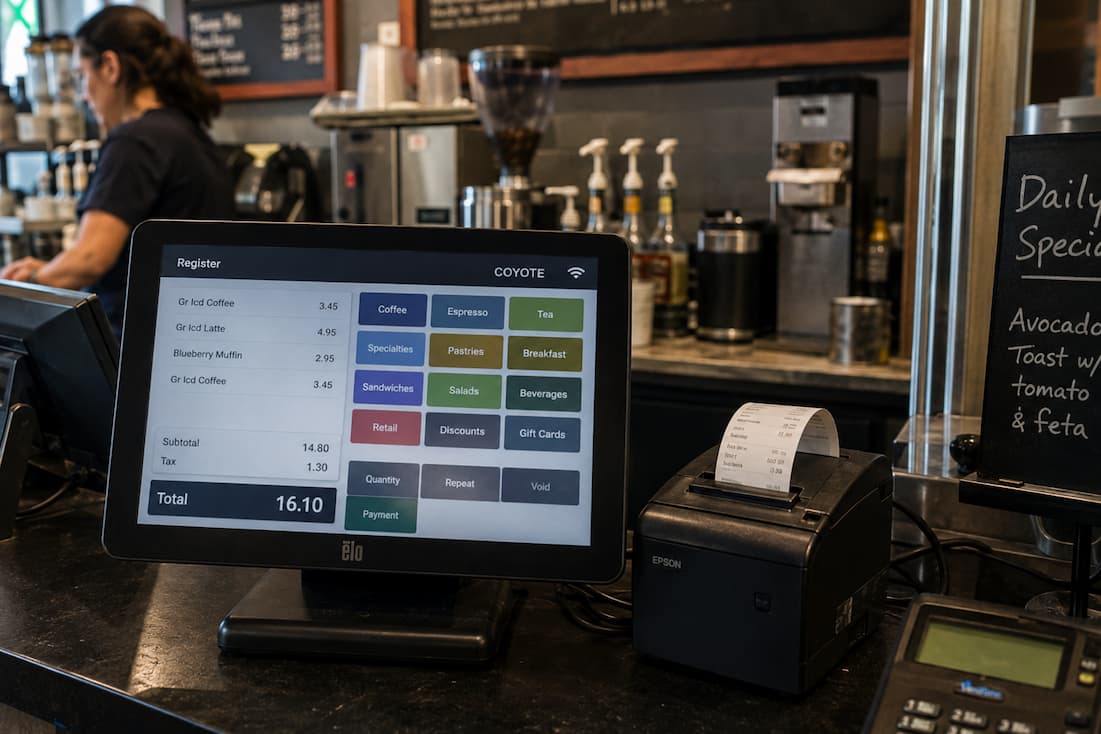
In the past, point-of-sale (POS) systems had an obvious function: calculating product prices, collecting payments, and printing receipts. Whether customers paid with cash or card, the system was typically just the final step in a retail transaction. Once the transaction was complete, it was no longer needed. Today’s POS systems are entirely different. Many retail POS systems are now among the most interconnected components of a business. They share data with inventory systems, accounting software, CRM systems, payment providers, fraud prevention services, tax systems, loyalty programs, and cloud-based management dashboards—all while the customer is standing right at the checkout.
This shift is part of a broader transformation in how businesses operate. Retailers today do more than just accept payments; they view the checkout process as a convergence point for financial, administrative, and customer data. A transaction no longer affects only the cash register. It can reduce inventory, track sales, calculate taxes, reward customers, notify warehouse systems, update sales reports, and ensure all financial data remains synchronized. Payments remain important, but they now represent just one link in a chain of interconnected business processes.
Every Sale Triggers Communication between Various Business Systems
In modern POS systems, scanning a barcode typically initiates a series of distinct processes even before the customer presents their payment card. The system identifies the product, retrieves the price, checks for promotional conditions, verifies stock levels, calculates VAT, and prepares for the customer’s chosen payment method. The POS software automates all these tasks and continuously communicates with other business platforms to ensure smooth operation.
Once payment is approved, coordination begins immediately. Inventory levels can be quickly adjusted, sales reports updated instantly, and accounting data automatically generated, eliminating the need for staff to repeatedly enter the same information. Companies with multiple branches can usually see these changes reflected across all locations in real time. This allows managers to gain a more accurate picture of sales throughout the day. The POS system is no longer just a standalone register, but a central hub through which real-time operational and financial data flows.
The Point of Sale Is No Longer Confined to the Store Itself
Although the term “point of sale” typically refers to a fixed location within a store, the concept has evolved far beyond the register itself. Restaurants use handheld terminals to collect payments at the table, market vendors use tablets with portable card readers to process transactions, delivery personnel accept electronic payments at customers’ doorsteps, and service staff often carry mobile payment systems to work from anywhere.
Despite these vastly different environments, they all rely on many of the same fundamental functions. The location of the sale is not relevant; businesses remain connected to data regarding products, payments, taxes, customers, and transaction reports. Thanks to cloud infrastructure, POS systems can securely share information without requiring that every transaction originate from the same register in the same building.
This freedom has also shifted customer expectations. An increasing number of customers expect stores to have access to their purchase history, process returns, issue electronic receipts, and recognize loyalty program memberships—regardless of which store or staff member they interact with.
Payment Processing is Just One Component of a Platform
The payment terminal is often the most prominent part of a point-of-sale (POS) system. However, focusing solely on this means missing out on the platform’s many other functionalities. Businesses expect their POS software to do far more than just process payments; it must also assist with inventory planning, staff management, customer interaction, sales analysis, and financial reporting.
Imagine a coffee shop adding a seasonal product to its menu. The POS platform ensures the product is available across all locations simultaneously, maintains consistent pricing, tracks ingredient usage by updating inventory levels, and generates sales reports showing revenue during promotional periods. All these tasks rely on a single, interconnected platform that processes customer transactions, even when it isn’t directly handling the payment itself.
As more business functions are integrated into a unified environment, POS systems are evolving from simple payment devices into business management platforms with financial capabilities that extend well beyond the checkout process.
Information Flows in Two Directions
Early computerized cash registers primarily recorded completed sales. The flow of information was one-way: from transaction to business record. Modern POS systems operate differently because they continuously both receive and transmit information. Before a sale is finalized, they gather data on products, price changes, promotional rules, tax settings, and customer preferences. After the sale, they send data back to inventory databases, financial systems, reporting tools, and other connected applications.
It is this two-way exchange that makes the system responsive, rather than merely reactive. If a product’s price changes centrally, all connected POS terminals can immediately use the new price without waiting for manual updates. If stock levels drop critically low, the purchasing team can derive insights from that day’s sales figures. POS terminals thus serve as both a source of useful data and as consumers of data generated by other departments within the organization.
Cloud Connectivity Changed How Businesses Manage Sales
The widespread adoption of cloud infrastructure is one of the most significant changes brought about by modern POS systems. In the past, companies typically stored sales data on a single computer or private server. While manageable for a single store, this approach proved inadequate for businesses with multiple locations or diverse sales methods. Data often required manual entry, reports were frequently outdated, and managers only gained insight into sales figures at the end of the day.
The rise of cloud-based platforms has changed this model. Authorized users can access the latest business data from virtually anywhere. Store managers can monitor sales across multiple locations, finance departments can view transaction summaries without exporting files, and inventory teams can identify best-selling items during business hours. Although payment terminals remain at the checkout, much of the operational information crucial to the business is no longer confined to that location. This information now becomes part of a networked environment, allowing all departments and devices to share and access the same data.
Integration is More Valuable Today Than Standalone Functionality
When evaluating point-of-sale (POS) systems, businesses no longer focus solely on payment capabilities. They may already be using separate software for marketing, customer relationship management, e-commerce, inventory planning, or stock management. The real question is often whether the POS platform can share data with other systems without creating extra workload or recording errors.
For instance, a retailer selling both online and offline would benefit immensely if the system automatically updated inventory, regardless of where the sale takes place. If a customer buys an item via the company’s website, the stock level in the physical store must update immediately. Furthermore, refunds processed in the physical store should automatically appear in financial reports and customer records without requiring manual updates. These integrations streamline document management and ensure consistency across all business data.
Security is No Longer Limited to Payment Data
While protecting customer data is a primary function of any POS system, modern systems also handle other types of critical business data. Customer information, employee access rights, sales data, inventory records, pricing rules, and operational reports are all valuable assets that require robust protection. As POS systems become increasingly interconnected, security extends far beyond merely safeguarding payment data.
Modern systems therefore rely on the coordinated operation of multiple security features. Different user accounts are assigned varying levels of access based on roles. Sensitive communications are typically encrypted during data transfer between systems, while detailed logs allow businesses to monitor changes to administrative settings whenever necessary. Software updates are also crucial, as they patch newly discovered security vulnerabilities and ensure compatibility with evolving payment standards. Businesses no longer view security as an afterthought in the payment processing workflow but rather as an ongoing responsibility that affects every component of the platform.
Data Collected at Checkout Supports Better Business Decisions
Every transaction represents more than just a financial exchange. Over time, sales activities generate a valuable set of operational data that businesses can use to understand customer needs, evaluate product performance, and plan for the future. With a POS system that organizes and presents this data, daily transactions turn into valuable business insights.
Managers no longer need to sift through thousands of receipts to identify patterns. Instead, they can analyze trends such as seasonal purchasing behavior, popular items, products experiencing sales spikes, or those seeing a gradual decline in sales. These insights assist businesses in inventory planning, staffing, executing effective marketing campaigns, and selecting the right products to sell. The point-of-sale system is more than just a place where money changes hands; it has become one of the best sources for understanding actual business operations.
A Connected Platform Compared With a Traditional Cash Register
| Traditional Cash Register | Modern Point-of-Sale Platform |
|---|---|
| Records completed sales | Coordinates sales, payments, inventory, reporting, and customer information |
| Operates mainly as standalone equipment | Connects with multiple business systems and cloud services |
| Limited reporting capabilities | Real-time dashboards and operational analytics |
| Primarily supports in-store transactions | Supports physical stores, online sales, mobile commerce, and service businesses |
| Manual synchronization is common | Automatic data sharing across connected applications |
Frequently Asked Questions
Can businesses use POS systems (POS terminals) without an internet connection?
Depending on the system’s design, some systems can continue to perform certain tasks even during a temporary internet outage. However, services such as cloud synchronization, remote reporting, and certain payment authorizations typically require an internet connection.
Is a payment terminal always part of a POS system?
No, payment terminals are usually just one component of a larger POS system. In most cases, a complete platform includes software for managing inventory, reports, customer data, and staff, as well as integration with other business applications.
Why do many businesses choose new POS systems to replace older ones?
System upgrades are not always driven by new payment technologies. Businesses typically upgrade systems to improve reporting, streamline operations, ensure compatibility with new software versions, support more points of sale, or enhance security and regulatory compliance.
Can advanced POS systems help small businesses?
Yes. While large retailers may have highly customized environments, many modern platforms offer flexibility for businesses of all sizes. Small businesses can often start with the most essential features and add capabilities—such as inventory management, analytics, customer engagement, or multi-store support—as their business grows.
From POS Systems to Business Expansion
As businesses increasingly digitize, the importance of POS systems becomes ever more apparent. Initially used solely to record sales, these systems have evolved into tools that link financial transactions with other business processes. Payment processing remains a crucial part of our work, but it is now part of a larger ecosystem that helps us track goods, communicate with customers, generate reports, ensure regulatory compliance, and make strategic decisions.
It is this shift that has led businesses to view point-of-sale systems as a long-term technological investment rather than merely a tool for the cashier. As business processes become increasingly interconnected, the systems that process every transaction are becoming vital for companies to understand their operations, plan daily activities, and adapt to evolving customer needs.