
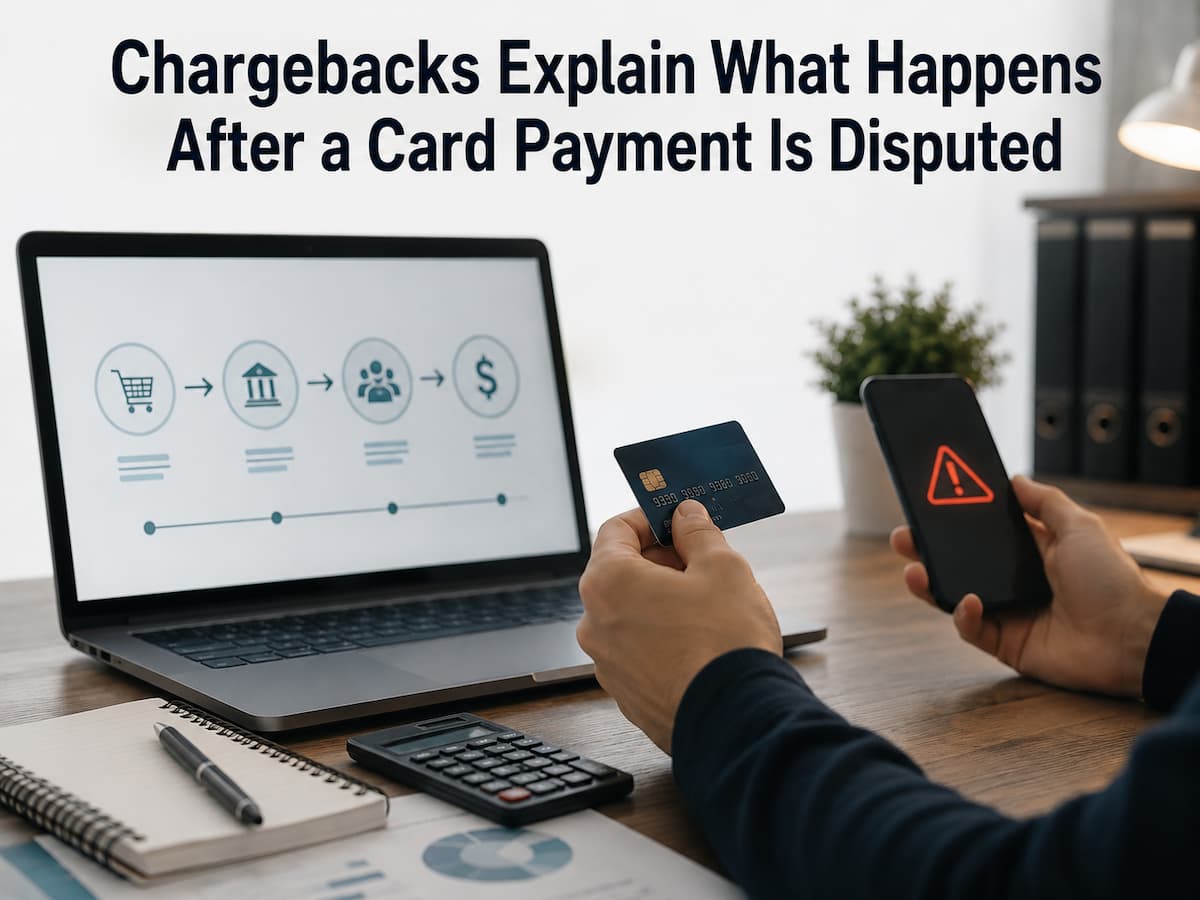
Credit card payments may appear to have been processed, but transactions can still be subject to investigation. For example, customers might discover that payment failed, orders were never shipped, a charge was applied twice, or they suspect the merchant failed to deliver the purchased goods. In such cases, cardholders can contact their bank to request an investigation.
Ultimately, this process can lead to a refund. Credit card users can reverse transactions via a chargeback, provided the request complies with relevant regulations. Requesting a refund from the merchant and filing a dispute are more complex, and neither guarantees an immediate win for the customer.
Understanding the process following a credit card payment dispute makes it easier for customers to navigate and resolve the issue. Merchants also benefit from understanding this process when payments are contested, as it helps them accurately record transactions, communicate with customers, and gather relevant evidence.
Why Do Chargebacks Occur?
People can dispute credit card charges and subsequently obtain a refund through a chargeback. Cardholders usually initiate the process by calling their bank or another financial institution.
The terms “dispute” and “chargeback” are often used interchangeably, but they are not always the same thing. When a cardholder objects to a transaction, it is referred to as a dispute. A chargeback is the process of reversing a transaction in accordance with the rules set by card issuers and financial institutions.
The specific steps involved depend on the card issuer, the type of transaction, the country or region, the reason for the dispute, and applicable consumer protection laws. Therefore, there is no uniform refund procedure or timeframe applicable to all credit card payments.
How Does the Credit Card Refund Request Process Work?
The process typically begins with the cardholder reporting the issue to the issuing institution. The customer informs the institution of what occurred and provides all requested information.
The reason for the dispute can be crucial. Customers can report unauthorized transactions, duplicate charges, incorrect amounts, non-receipt of goods, or other issues covered by dispute rules.
The payer reviews the details and determines the next steps. Merchants and their payment processing partners may intervene when they meet certain conditions.
In other words, the initial complaint does not always determine the outcome. A disputed transaction may involve multiple steps before both parties ultimately decide whether the payment is upheld or reversed.
Why the Reason for the Dispute Matters
Not every chargeback involves the same question. The evidence needed to evaluate an unauthorized transaction can be very different from the evidence needed to evaluate a delivery problem.
Imagine that a customer disputes a $250 online purchase because they claim they never received the package. Information about the order, shipping, delivery, and communication with the customer may be relevant.
Now consider a customer who says they never authorized the transaction in the first place. In that situation, information relating to the transaction and authentication may be more relevant than delivery records.
This is why a merchant’s response should address the specific reason for the dispute. Simply showing that a payment was processed does not necessarily answer every question a cardholder may raise.
What Does the Merchant Do?
Once the appropriate payment-processing channel notifies the merchant of a dispute, the business may have an opportunity to respond.
The merchant can review its records and determine whether the customer’s claim is supported by the available information. If the business believes the chargeback is incorrect, it may submit evidence challenging the dispute.
Potentially relevant records can include receipts, invoices, order information, delivery records, refund records, cancellation communications, customer messages, and other documentation related to the transaction.
The most useful evidence depends on the dispute. A merchant dealing with a non-delivery claim may need records showing fulfillment or delivery. A merchant responding to a cancellation-related dispute may need records showing when the cancellation was requested and what happened afterward.
The goal is not simply to send as much information as possible. The response should be organized around the actual issue being disputed.
What Is Representment?
When a merchant challenges a chargeback by submitting evidence that supports the transaction, the process is commonly referred to as representment.
Representment allows the merchant to explain why it believes the transaction should not have been reversed. The merchant’s response may include documentation that contradicts the customer’s claim or demonstrates that the transaction met the applicable requirements.
For example, suppose a customer claims that an order was never delivered. The merchant may have shipping and delivery information that supports its position. If that evidence is relevant and satisfies the applicable rules, it can be submitted as part of the response.
Representment does not guarantee that the merchant will win. The evidence must be considered within the rules governing the particular dispute.
Does a Chargeback Mean the Customer Automatically Gets the Money Back?
No. Filing a dispute does not automatically establish that the cardholder is entitled to a permanent refund.
Depending on the circumstances and the policies involved, a cardholder may receive a temporary credit while the dispute is being investigated. That credit should not necessarily be interpreted as the final outcome.
If the investigation determines that the transaction was valid or that the dispute does not meet the applicable requirements, the temporary credit may be removed and the customer may once again be responsible for the amount.
This is one reason consumers should pay attention to communications from their card issuer throughout the dispute process rather than assuming that an initial account adjustment represents a final decision.
How Long Does a Chargeback Take?
There is no universal timeframe for every chargeback.
The length of the process can depend on the card network, type of transaction, reason for the dispute, issuer, merchant, acquiring institution, applicable deadlines, and whether additional stages of review are necessary.
Certain U.S. credit-card billing disputes are governed by specific federal requirements. For qualifying billing errors, the Federal Trade Commission explains that consumers generally must notify the credit-card company in writing within 60 days after the statement containing the error was sent. The issuer generally has specific periods for acknowledging and resolving such disputes.
These requirements apply to particular U.S. credit-card billing-error situations and should not be presented as a universal deadline for all chargebacks. Consumers outside the United States, as well as people using different types of cards or disputing different types of transactions, may be subject to different procedures.
What Evidence Should Consumers Keep?
Anyone disputing a card payment should keep records related to the transaction and the problem that led to the dispute.
Useful documentation can include the original receipt, order confirmation, account statement, emails with the merchant, cancellation requests, refund confirmations, delivery information, and screenshots or other records that help establish what happened.
A simple timeline can also make the situation easier to explain. Record when you made the payment, discovered the problem, contacted the merchant, received a response, and submitted the dispute.
Keeping these records is particularly useful when the dispute involves a disagreement about what was purchased, what was promised, whether an order was delivered, or whether a refund was requested.
Consumers should also follow the instructions provided by their card issuer because documentation requirements and submission methods can differ.
What Should Merchants Keep?
Merchants can reduce confusion during payment disputes by maintaining clear transaction records from the beginning.
A business should be able to determine what was purchased, when the transaction occurred, what information was provided to the customer, whether the product or service was delivered, whether the customer contacted the business, and whether a refund or cancellation occurred.
For online transactions, records relating to the customer’s order and fulfillment process can be particularly useful. Depending on the type of dispute, other transaction or authentication information may also become relevant.
Good recordkeeping does not guarantee that a merchant will successfully challenge a chargeback. It simply gives the business reliable information to use when responding to a dispute.
Why Customer Communication Can Matter
Some payment disputes begin because the customer cannot resolve a problem with the merchant.
A customer who sees an unexpected charge or has an issue with an order may first try to contact the business. If the business is difficult to reach or the customer’s concern is not handled clearly, the customer may eventually contact the card issuer.
Clear communication can therefore help prevent some avoidable disputes. Merchants can make it easier for customers to understand charges by using recognizable billing descriptors, providing clear order confirmations, explaining refund procedures, and responding promptly when a transaction problem is reported.
These practices do not eliminate legitimate disputes, but they can make ordinary transaction problems easier to resolve before they become formal payment disputes.
What Happens If the Merchant Does Not Respond?
A merchant should not assume that ignoring a chargeback will make it disappear.
If the business is allowed to respond and does not provide the requested information within the applicable timeframe, the dispute may proceed according to the relevant rules without the merchant’s evidence.
The exact consequences depend on the payment network, processor, dispute category, and applicable procedures. For this reason, businesses should treat chargeback notifications seriously and review the response requirements rather than relying on a general assumption about what will happen.
Can a Chargeback Be Reversed?
At the moment it is initiated, a chargeback can be reversed.
If a merchant successfully challenges a dispute, the financial outcome can change. Conversely, a merchant’s response may fail to establish its position, allowing the reversal to stand.
Some disputes can also involve additional stages when the parties continue to disagree. The terminology and procedures for those stages vary between payment networks.
The important takeaway is that a chargeback can be a process rather than a single event. The outcome depends on the circumstances, evidence, applicable rules, and decisions made during the dispute process.
Chargebacks Are Different From Ordinary Refunds
A merchant-issued refund and a chargeback are not the same thing. With an ordinary refund, the merchant generally agrees to return money to the customer through the appropriate payment process.
With a chargeback, the cardholder has challenged the transaction through the card issuer, and it is handled through the card payment network’s dispute procedures.
This distinction matters for both sides. A customer who simply wants a merchant to correct a straightforward billing problem may be able to resolve it directly with the business, while a customer dealing with an unauthorized transaction or an unresolved qualifying dispute may need to contact the card issuer.
What Consumers Should Do After Disputing a Payment
After submitting a dispute, consumers should monitor their account and communications from the card issuer. They should respond promptly if the card issuer requests additional information and keep copies of any documents they submit during the process.
It is also useful to distinguish the disputed amount from other charges on the account. If the issuer provides specific instructions about payments that remain due during an investigation, those instructions should be followed closely.
Consumers should avoid assuming that an initial temporary credit represents the final decision. The issuer’s later communication may confirm whether the dispute was accepted, rejected, or otherwise resolved.
What Measures Can a Business Take to Handle Chargebacks?
While businesses cannot completely prevent chargebacks, they can streamline the dispute investigation process.
Clear receipts, accurate order details, identifiable billing information, reliable delivery documentation, accessible customer service channels, and well-maintained refund records make it easier to determine exactly what occurred during a transaction.
Additionally, businesses need to understand how to handle disputes regarding the various payment methods they accept. Different transaction types may involve different deadlines and required supporting documents; therefore, a process designed for one type of transaction might not apply to another.
In general, the best approach is to maintain accurate records, communicate clearly with customers, resolve disputes promptly, and provide evidence that directly supports the claim.
Conclusion
When a dispute arises regarding a credit card payment, it is not certain that the customer will win or the merchant will lose. When a dispute occurs, the transaction and the reasons behind it can be reviewed in accordance with applicable rules.
The issuing institution may request information from the cardholder, and the merchant has the opportunity to respond; the relevant evidence can ultimately alter the outcome. Temporary credits are not permanent, and if the claim is successfully contested, the merchant’s initial loss may be reversed.
For consumers, it is advisable to report issues immediately, keep supporting documentation, and follow the instructions provided by the issuing institution. For merchants, accurate transaction data and prompt responses to specific disputes are crucial.
Chargeback rules vary by payment network, transaction type, and jurisdiction. Therefore, those handling specific disputes must follow the instructions and timeframes of the issuing institution, payment processor, or relevant authority, rather than assuming that a universal chargeback framework applies to all situations.