
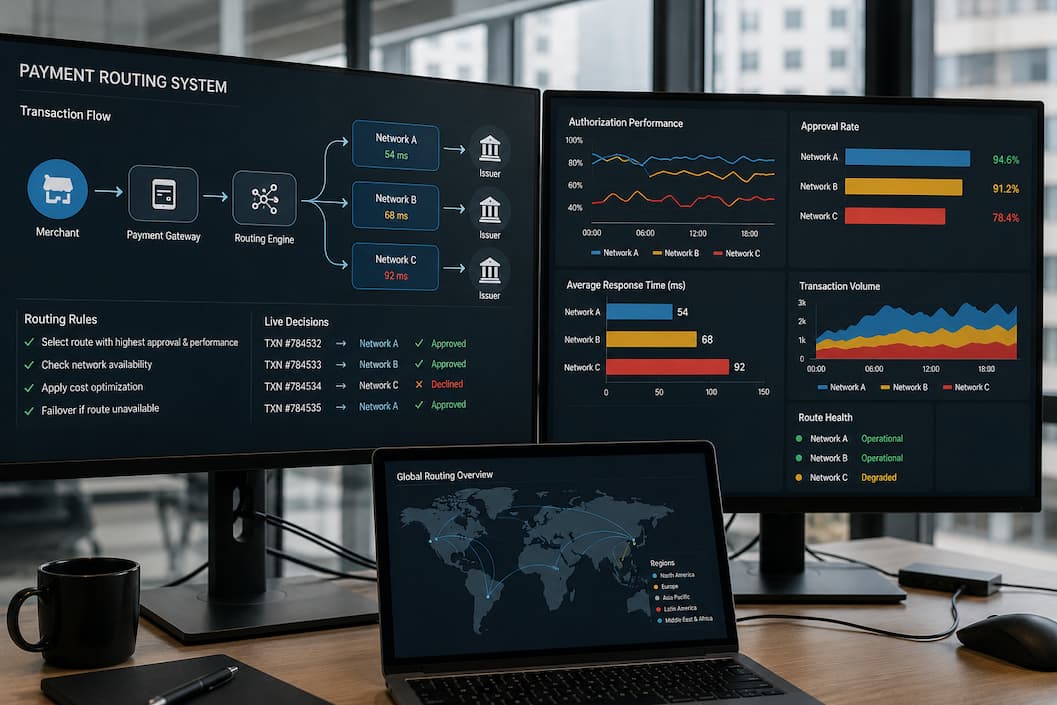
Most digital payments happen so quickly that we tend to assume they follow a fixed path from the merchant to the customer’s bank. In reality, however, payment systems rarely operate in a straight line. Authorization requests enter a network via various paths, and selecting the most suitable path is crucial for modern payment infrastructure. This path selection is rarely arbitrary; it depends on technological compatibility, network availability, business agreements, geographic location, legal restrictions, and the payment methods supported by both the customer and the merchant. Before the issuing bank even considers approving the purchase, the transaction typically undergoes multiple routing decisions that determine how it flows through the financial ecosystem.
This process often goes unnoticed because routing takes place in milliseconds. The customer sees only a confirmation page, while the merchant receives a “success” or “failure” notification; neither party knows how many routing options were considered. Yet, for payment service providers processing millions of transactions daily, efficient routing is more than just a technical issue. It impacts transaction speed, operational stability, processing costs, and the likelihood of a successful initial payment attempt.
Payment Processes Are Not Always Identical
Imagine two customers signing up for the same online service subscription at virtually the same time. Both hold an internationally accepted debit card, use the same currency, and complete their transactions in neighboring cities. From the merchant’s perspective, these two transactions appear virtually identical. In reality, however, the paths taken to reach the issuing bank can differ drastically. One payment might be processed via a domestic payment processing partner because that network can approve locally issued bank cards more quickly. Another payment might go through an international payment network because the issuing bank belongs to a different clearing system. Neither method is inherently superior; they simply reflect the capabilities of the payment network and the technology underpinning a specific transaction.
This flexibility enables payment systems to operate efficiently across different countries, financial institutions, and payment methods. Modern routing architectures do not force every transaction along a single, predetermined path; instead, they select the optimal route based on actual conditions to meet business and technical requirements. As payment systems evolve, this ability to flexibly choose between multiple paths is becoming increasingly important.
Routing Decisions Require Balancing Speed and Reliability
At first glance, the fastest route always seems like the logical choice. Speed is certainly important, especially when customers expect authorization within seconds. However, it is just one of many factors to consider. Payment service providers must also ensure that the chosen channels are available, stable, and capable of processing transactions correctly.
Consider, for instance, scheduled maintenance or temporary connectivity issues with partners. Even if operations are generally smooth, continuing to route all payments via that method could lead to delays and authorization rejections. Routing systems can therefore continuously monitor operational status and reroute transactions as needed. This dynamic adaptability helps maintain a consistent payment experience, even if parts of the network go down.
The same principle applies to capacity. During peak periods—such as major shopping events or holiday promotions—when the volume of transactions to be processed is exceptionally high, payment service providers can distribute transactions across multiple available routes instead of relying on a single connection. Distributing traffic reduces the risk of congestion and helps maintain predictable response times for retailers and customers.
Geography Shapes More Decisions Than Most People Expect
While digital payments are executed electronically, geolocation still plays a role in their processing. Financial regulations vary by jurisdiction, national payment systems often coexist with international card networks, and some countries have policies requiring certain types of transactions to be routed through their domestic payment infrastructure whenever possible.
These differences add complexity for businesses with customers in multiple locations. A payment accepted in one jurisdiction may be processed differently than a seemingly identical payment in another country, due to variations in routing methods, the financial institutions involved, and legal requirements. Consequently, geolocation is not merely about the destination; it is also a factor in determining the optimal route for each transaction. This is how routing systems handle geolocation.
As digital commerce becomes increasingly global, routing technology must continuously evolve to adapt to new payment networks, changing laws and regulations, and shifting business partnerships. The goal is not to establish a single route for all payments, but to ensure that each transaction follows a suitable path that aligns with the specific technology and operational conditions.
Not All Routes Are Created Equal
Routing decisions are not determined solely by technological capabilities; every available route carries commercial implications. For institutions processing thousands of transactions daily, even subtle differences in processing costs can have a significant cumulative impact. Therefore, payment service providers consider not only whether a transaction can be completed, but also whether a more efficient route exists that meets the same technical and regulatory requirements.
However, this approach does not always mean choosing the lowest-cost option. Lower-cost payment routes may entail higher authorization failure rates, longer response times, or a lack of support for certain payment methods. Conversely, routes with slightly higher processing costs can be faster and more reliable in terms of approval. The goal is to strike an optimal balance between operational excellence and business efficiency, rather than sacrificing other aspects to optimize just one.
A Single Merchant May Use Multiple Routes in a Single Day
Most merchants assume their payment service provider has only one fixed processing route. In reality, however, routing decisions can change at any moment without the merchant needing to adjust anything in the checkout process. Payment interfaces may look identical, but the underlying technology is dynamic, adapting to constantly changing conditions in the background.
Imagine an online business serving customers in multiple regions. Typically, transactions are processed via the service provider’s preferred path. If a processing partner’s response time is slower than expected, other paths with spare capacity will temporarily handle a larger share of payment traffic. Once performance returns to normal, transactions can gradually be switched back to the original path without the customer noticing a thing.
This flexibility ensures stable authorization performance, even when specific components of the payment system encounter occasional issues. Modern routing systems do not rely on a single path that could become a bottleneck; instead, they continuously evaluate all available options and adapt as necessary.
Smart Routing is Becoming Increasingly Flexible
In the past, routing decisions were primarily rule-based. Payments meeting specific criteria followed specific paths, and these rules changed only when administrators updated the system. This approach worked well in relatively predictable payment environments, but today’s digital commerce is larger and more dynamic.
Many payment systems incorporate real-time performance data into their routing technologies. They no longer rely solely on fixed rules but take into account factors such as authorization success rates, response times, network availability, and the outcomes of previous transactions. If a route consistently performs well for a particular type of payment, it will receive an increasing volume of such payments until conditions change.
However, this does not mean that all routing decisions are made entirely by artificial intelligence. Engineers still establish compliance standards, operational safeguards, and business objectives. Adaptive technology simply serves as a tool to respond more quickly and implement these objectives as payment conditions shift throughout the day.
When Payments Fail
Routing flexibility offers an effective solution for unexpected outages. Financial networks sometimes undergo maintenance, experience connectivity issues, or suffer temporary interruptions. Without a backup plan, even minor technical problems can prevent merchants from receiving payments until the system is restored.
That is why many payment service providers build redundancy mechanisms into their infrastructure. If a compatible alternative path exists, the transaction can be processed via that method without waiting for the original path to be restored. Customers usually do not notice this switch, as the payment is completed within the expected timeframe.
This ability to route traffic is similar to how internet data is transmitted across multiple networks rather than a single permanent connection. Payment routing is subject to stricter financial and regulatory constraints, but the ultimate goal is similar: ensuring reliable communication even when parts of the network are unavailable.
Why Routing is More Important Than Ever for Payment Methods
Debit cards are no longer the only players in the digital payments landscape. Consumers are increasingly using mobile wallets, account-to-account transfers, instant payment systems, “buy now, pay later” services, and region-specific payment methods. Each payment method has its own technical specifications, participating institutions, and settlement processes.
As the number of payment methods continues to grow, routing is no longer just about selecting a single path for all transactions; it is about finding the right infrastructure for the payment method chosen by the customer. Routing decisions that work for international credit cards may not work for domestic real-time payment networks or digital wallet transactions. It is this increasing diversity that drives the continuous improvement of routing technology, in parallel with developments in the payments sector as a whole. Supporting new payment methods is not merely a matter of adding a button to the checkout page; it involves processing these payments through an increasingly interconnected network of financial institutions and making well-informed decisions regarding the process.
Comparing Fixed and Adaptive Routing
| Aspect | Fixed Routing | Adaptive Routing |
|---|---|---|
| Route selection | Predetermined according to predefined rules | Adjusts according to current conditions and performance |
| Response to outages | Limited unless manually changed | Can redirect eligible transactions automatically |
| Performance optimization | Relatively static | Continuously evaluated using operational data |
| Scalability | Suitable for simpler environments | Better suited to complex, high-volume payment ecosystems |
Looking Beyond the Authorization Request
Routing decisions are far less visible than fraud prevention or payment security, yet they have a subtle impact on virtually every electronic transaction. Payment routes determine the speed at which funds reach the appropriate financial institutions, the stability of merchant authorization rates, and the resilience of the entire payment system amidst changing conditions.
As new payment methods emerge in digital commerce and business connections expand, routing will only become more complex. Yet the goal remains the same: ensuring every payment reaches its destination and selecting the most suitable route for that specific transaction, rather than assuming all payments must follow the same path.
Not Every Route Costs the Same
Routing decisions are not merely a matter of technical capabilities. Every available route carries commercial implications; for institutions processing thousands of transactions daily, even minor differences in processing costs can have a significant cumulative impact. Consequently, payment service providers must consider not only whether a transaction can be completed, but also whether a more efficient route exists that meets the same technical and regulatory requirements.
However, this does not always mean opting for the lowest price. Cheaper payment methods may entail higher authorization failure rates, longer response times, or a lack of support for specific payment methods. Conversely, a slightly more expensive method might consistently deliver superior results in terms of approval rates and reliability. The objective is to strike an optimal balance between operational excellence and business efficiency, rather than sacrificing one for the other.
The Same Merchant May Use Different Routes Throughout the Day
Most online retailers believe their payment service provider employs only one fixed payment method. However, routing decisions can change at any moment without the online merchant needing to make any adjustments to the checkout process. Payment websites may appear static, but the underlying technology is dynamic, adapting to changing conditions in the background.
Consider, for example, an online business serving customers across multiple regions. Typically, transactions are processed using the service provider’s preferred method. If a processing partner’s response time is slower than expected, another method with available capacity can temporarily handle a larger volume of payments. Once the system returns to normal operation, transactions can gradually resume, and customers will notice no difference.
This flexibility contributes to stable authorization performance, even when certain components of the payment system encounter occasional issues. Modern routing systems do not rely on a single path that could create a bottleneck; instead, they continuously evaluate various options and adapt accordingly.
Intelligent Routing is More Adaptive
In the past, routing decisions were primarily rule-based. Payments meeting specific criteria followed specific routes, and these rules changed only when administrators updated the system. While this approach worked well in relatively predictable payment environments, today’s digital commerce landscape is larger and more dynamic.
Many payment systems incorporate real-time performance data into their routing technologies. Rather than relying solely on fixed rules, they factor in elements such as authorization success rates, response times, network availability, and the outcomes of previous transactions. If a particular route consistently outperforms others for a specific type of payment, it will increasingly handle a larger share of those payments—at least until conditions shift.
However, this does not mean that artificial intelligence makes every routing decision. Compliance standards, operational safeguards, and business objectives are still defined by engineers. Adaptive technologies simply provide a means to respond more quickly and achieve these goals as payment conditions fluctuate throughout the day.
When a Payment Takes a Different Route Than Expected
Routing flexibility also effectively mitigates unexpected disruptions. Financial networks occasionally experience maintenance, connectivity issues, or temporary outages. Without backup plans, even minor technical glitches can prevent merchants from receiving payments until the system is restored.
For this reason, many payment service providers build redundancy mechanisms into their infrastructure. If a compatible backup path exists, a transaction can be processed via an alternative method without waiting for the original path to be restored. Customers typically do not notice this switch, as the payment is completed within the expected timeframe. This traffic routing capability is similar to how internet data is transmitted across multiple networks rather than via a single permanent connection. Payment routing is subject to stricter financial and regulatory constraints, yet the ultimate goal is the same: ensuring reliable communication even when parts of the network are unavailable.
Why Routing Is More Important Than Ever for Payment Methods
Debit cards are no longer the only players in the digital payments landscape. Consumers are increasingly using mobile wallets, account-to-account transfers, instant payment systems, “buy now, pay later” services, and region-specific payment methods. Each payment method has its own technical specifications, participating institutions, and settlement processes.
As the number of payment methods continues to grow, routing is no longer just about selecting a single path for all transactions; it is about finding the right infrastructure for the payment method chosen by the customer. Routing decisions that work for international credit cards may not work for domestic real-time payment networks or digital wallet transactions.
It is this growing diversity that drives continuous improvement in routing technology as the payments sector as a whole evolves. Supporting new payment methods involves more than just adding a button to the checkout page; it is about how these payments are processed across an increasingly interconnected network of financial institutions and how informed decisions regarding them are made.
Comparing Fixed and Adaptive Routing
| Aspect | Fixed Routing | Adaptive Routing |
|---|---|---|
| Route selection | Predetermined according to predefined rules | Adjusts according to current conditions and performance |
| Response to outages | Limited unless manually changed | Can redirect eligible transactions automatically |
| Performance optimization | Relatively static | Continuously evaluated using operational data |
| Scalability | Suitable for simpler environments | Better suited to complex, high-volume payment ecosystems |
Looking Beyond the Authorization Request
Routing decisions often receive far less attention than fraud prevention or payment security, yet they quietly influence almost every electronic transaction. Selecting an appropriate path affects whether a payment reaches the correct financial institution efficiently, whether the merchant experiences consistent authorization rates, and whether the overall payment ecosystem remains resilient when conditions change.
As digital commerce continues to introduce new payment methods and connect businesses across more regions, routing will become even more sophisticated. The goal will remain unchanged: ensure that every payment reaches its destination through a path that is reliable, efficient, and appropriate for the specific transaction rather than assuming that every payment should travel the same road.